
We view safety as an integral part of the execution of every project. That is why our preventive efforts begin before our teams arrive on site and continue throughout their work, adapting to the specific risks of each operation.
An electrical room, a processing plant, a high-altitude area, or an environment with dust, noise, extreme temperatures, or a risk of explosion each require different solutions. And while Personal Protective Equipment (PPE) such as hard hats, hearing protection, safety glasses, or specialized clothing is essential, it represents only one part of the safety culture.
At Tunning, the process begins with coordinating exams and certifications and continues with training, orientations, and the provision of PPE appropriate for each activity. Our Risk Prevention department works in coordination with Human Resources and Certification, relying on technological platforms that enable us to manage documentation and meet the requirements for on-site access and continued employment.
“I aim to be both a partner and a facilitator. Today, the figure of the ‘inspector’ is distant, out of place, and creates a disconnect between safety and the real impact we need to convey,” explains Mariano Lara, a risk prevention specialist at Tunning.
This approach is also maintained on-site. The goal is to support our professionals, address their needs, and help them recognize the risks specific to each operation. Because a culture of prevention is built through dialogue, training, and raising awareness.
The same applies to PPE. Its selection is based on a risk matrix, the corresponding assessment, and work procedures, taking into account the interaction between the various hazards present in an operation. In mining—and especially in electrical work—protection must address scenarios where, for example, electrical, chemical, thermal, respiratory, and acoustic risks may coexist.
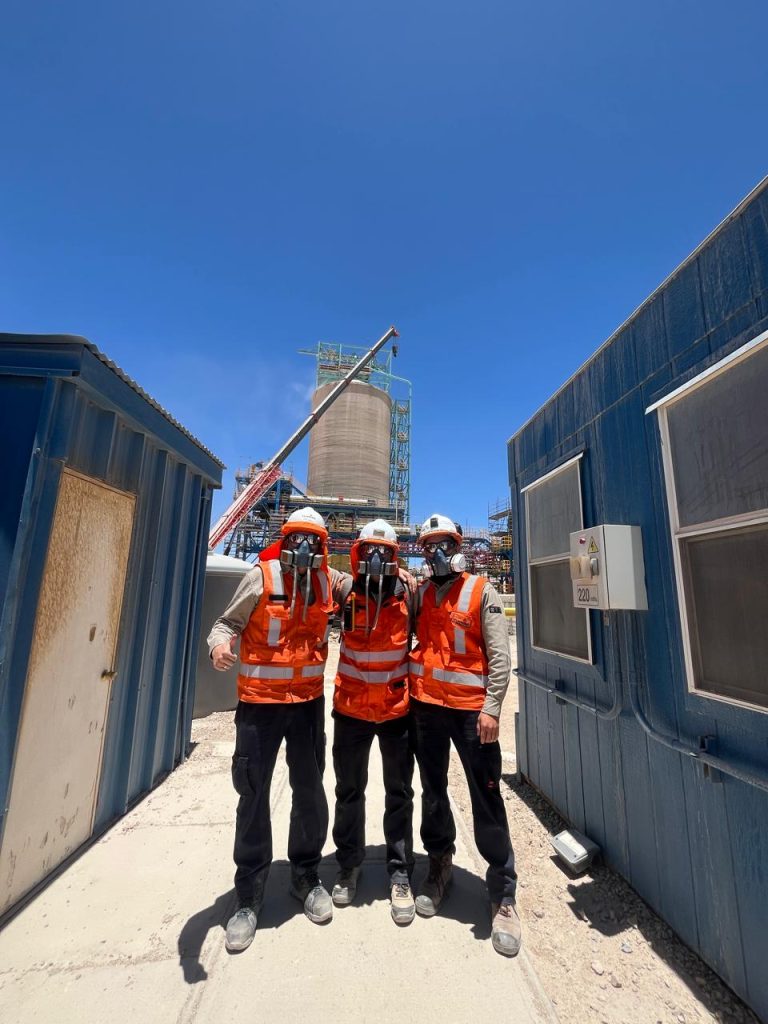
“The training process raises our staff’s awareness of personal protective equipment, presenting it as the last line of defense against direct exposure to risk,” Lara notes.
The challenge is to turn that awareness into habitual behavior—especially among those who are just starting their careers and arriving at an industrial worksite for the first time. In these cases, orientation and training take on special importance, as they help employees understand that behind every procedure, piece of protective equipment, or restriction lies a risk that must be controlled.
Our message to those entering a worksite for the first time: ask questions, listen, and don’t be afraid to admit when you don’t know something. Experience is built over time, but safety is non-negotiable. At Tunning, we want every person to understand their risks, know how to address them, and return home safely after every workday.